What Is Digital Marketing? A Complete Guide for Modern Businesses
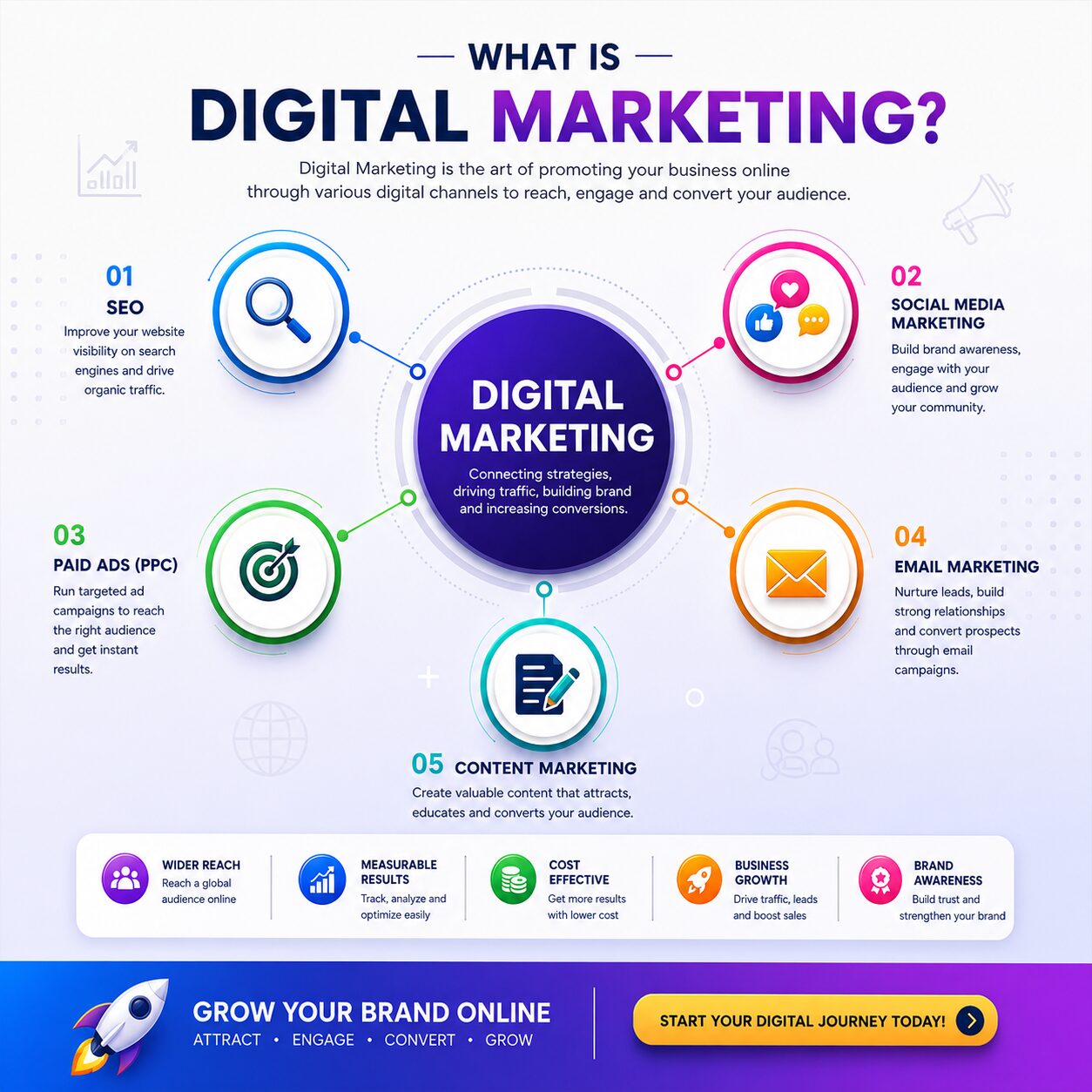
Digital marketing is the process of promoting products, services, or brands using online channels such as search engines, social media, email, and websites. Unlike traditional marketing, digital marketing allows businesses to reach a targeted audience, track performance in real time, and optimize campaigns for better results.
In today’s fast-moving digital world, having an online presence is not optional—it’s essential. Whether you’re a startup or an established business, digital marketing helps you connect with potential customers where they spend most of their time: online.
Why Digital Marketing Matters
Digital marketing offers measurable growth, better targeting, and higher ROI compared to traditional methods. It allows businesses to:
- Reach a global audience
- Target specific customer segments
- Track performance and optimize campaigns
- Generate qualified leads consistently
With the right strategy, businesses can generate 100+ leads per month and build a strong brand presence.
Key Components of Digital Marketing
1. Search Engine Optimization (SEO)
SEO focuses on improving your website’s visibility on search engines like Google. A well-optimized website ranks higher, bringing in organic traffic.
Enhancing Content Relevance:
Your content should match user intent. Use relevant keywords, answer user queries, and provide valuable information. High-quality, relevant content improves rankings and keeps visitors engaged.
2. Social Media Marketing
Platforms like Instagram, Facebook, and LinkedIn help businesses connect with their audience, build trust, and promote products visually.
3. Pay-Per-Click Advertising (PPC)
Paid ads allow instant visibility on search engines and social platforms. You only pay when someone clicks on your ad, making it cost-effective when optimized properly.
4. Email Marketing
Email marketing helps nurture leads and maintain customer relationships. Personalized emails improve engagement and conversions.
5. Content Marketing
Content is the backbone of digital marketing. Blogs, videos, and infographics educate users and establish authority in your niche.
6. Affiliate Marketing
Affiliate marketing is a performance-based strategy where businesses partner with individuals or companies to promote their products. Affiliates earn a commission for every sale or lead generated through their referral links.
7. Influencer Marketing
Influencer marketing leverages individuals with a strong online presence to promote your brand. These influencers already have a loyal audience, making it easier to build trust and drive engagement.

Measure & Analyze Performance
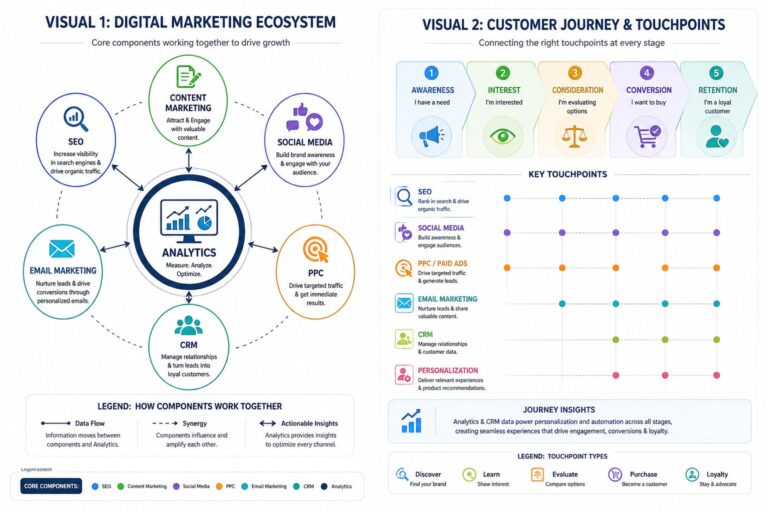
Digital marketing is data-driven. Tracking and analyzing performance helps you understand what works and what needs improvement.
Key metrics to track:
- Website traffic
- Conversion rate
- Bounce rate
- Click-through rate (CTR)
- Cost per lead (CPL)
Using tools like Google Analytics and Search Console, you can make informed decisions and continuously optimize your campaigns for better results.
Build a Strong Digital Marketing Strategy
To succeed in digital marketing, you need a clear and structured strategy:
- Define your target audience
- Set measurable goals
- Choose the right marketing channels
- Create high-quality content
- Monitor and optimize regularly
Consistency and adaptability are key to long-term success
🚀 Strong Call-To-Action (CTA)
Don’t let your visitors leave without taking action.
👉 Looking to grow your business with digital marketing?
We help brands generate leads, increase visibility, and boost revenue with result-driven strategies.
📞 Get a Free Consultation Today
📩 Contact Us Now and Start Scaling Your Business!
1. Why is digital marketing important for businesses?
Digital marketing helps businesses increase online visibility, generate leads, improve customer engagement, and achieve measurable growth at a lower cost compared to traditional marketing.
2. How does SEO help in digital marketing?
SEO helps websites rank higher on search engines like Google, increasing organic traffic, improving brand visibility, and attracting potential customers without paid ads.
3. What is the difference between SEO and PPC?
SEO focuses on gaining free organic traffic through optimization, while PPC (Pay-Per-Click) involves paid advertisements where businesses pay each time someone clicks on their ad.
4. Is digital marketing suitable for small businesses?
Yes, digital marketing is highly effective for small businesses because it allows targeted marketing, budget control, and measurable results that help compete with larger brands.
